
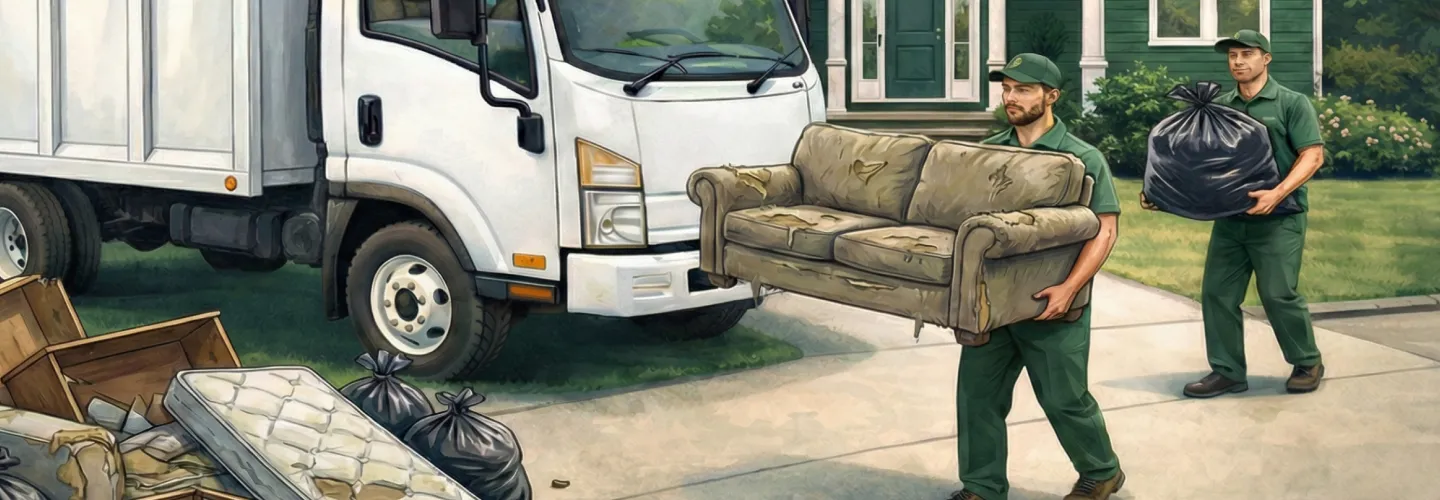
Dallas Restaurants Junk Removal Services
Choose our Restaurants Junk Removal for fast, hassle-free service that keeps your business clean, compliant, and ready to serve customers—so you can focus on what matters most.
Get a Free QuoteOur Dallas Junk Removal Services
Restaurants Junk Removal in Dallas, GA – Local Service Guide
Restaurants in Dallas, GA, from bustling Main Street eateries to family-owned spots near Watson Drive and the historic district, face unique junk removal needs. Seasonal menu changes, kitchen upgrades, and health code compliance often trigger the need to clear out old appliances, furniture, and bulk waste. Local regulations require careful sorting and disposal—recycling metal fixtures, donating usable items, and ensuring hazardous materials are handled properly. Access can be challenging in busy commercial zones, especially during peak hours or inclement weather, so planning for off-hours pickups is key. Many Dallas restaurants coordinate with local haulers for discreet, efficient service that minimizes disruption to daily operations. For larger projects, such as post-renovation cleanouts or equipment overhauls, dumpsters or specialty removal may be needed, with attention to city permitting and scheduling. For more on local disposal rules and resources, visit the Dallas Public Works Department.
Key Considerations for Restaurants Junk Removal in Dallas
- Timing pickups to avoid peak service hours and minimize business disruption
- Securing necessary permits for large-scale or curbside disposals
- Using approved disposal and recycling channels for commercial waste
- Ensuring clear access for removal vehicles in tight downtown or plaza locations
- Accurately estimating volume and category-specific items (e.g., kitchen equipment, seating)
- Coordinating with city services for compliance and efficient scheduling
Benefits of Restaurants Junk Removal in Dallas
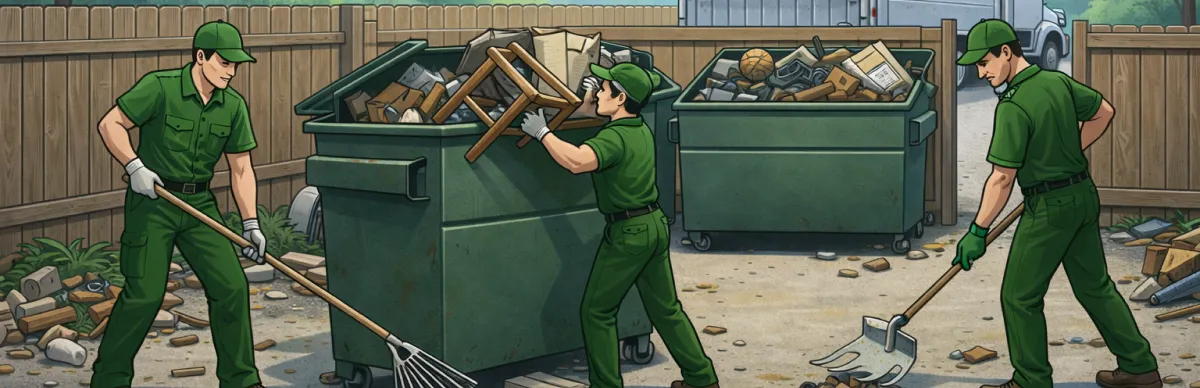
Fast and Reliable Service
Eco-Friendly Disposal Solutions
Flexible Scheduling Options
Experienced Junk Removal Team
Compliance With Local Regulations
Cost-Effective Junk Removal
Coordinating Restaurant Equipment Disposal with Dallas's Public Works Department
Restaurant closures, renovations, and kitchen upgrades in Dallas, GA generate substantial volumes of commercial waste requiring proper coordination with municipal services. The Dallas Public Works Department oversees infrastructure services including stormwater management and utility operations, making it a critical point of contact for restaurant owners managing large-scale junk removal projects. Restaurant waste often includes items that demand specialized handling due to size, weight, and material composition.
- Commercial cooking equipment (ovens, fryers, grills) may contain grease residue requiring decontamination before disposal
- Walk-in cooler and freezer units contain refrigerants regulated under federal law
- Stainless steel prep tables and shelving are candidates for scrap metal recycling
- Booths, chairs, and dining furniture should be evaluated for donation or reuse before landfill disposal
- Point-of-sale systems and electronics fall under e-waste disposal requirements
Restaurant owners should contact the Public Works Department before scheduling removal to confirm any municipal coordination requirements for commercial waste hauling within city limits.
Dallas Public Works Department
116 Main Street, Dallas, GA 30132
Phone: (770) 443-8110
Official Website: Dallas Public Works Department
Georgia's Solid Waste Management Act and Restaurant Disposal Compliance
All commercial waste disposal in Dallas, GA must comply with the Georgia Comprehensive Solid Waste Management Act (O.C.G.A. § 12-8-20), which establishes statewide standards for solid waste handling, transportation, and disposal. The Georgia Environmental Protection Division (GA EPD) enforces these regulations and oversees permitting for solid waste facilities throughout the state. Restaurant junk removal projects must adhere to several key provisions under this framework.
- Waste transportation must be conducted by properly permitted haulers; unauthorized dumping carries penalties of up to $25,000 per day per violation under Georgia law
- Grease trap waste and used cooking oil are classified separately from solid waste and require licensed liquid waste haulers
- Refrigerant-containing equipment (coolers, freezers, ice machines) must have refrigerants recovered by an EPA Section 608-certified technician before disposal
- Construction and demolition debris from restaurant renovations must be separated from general commercial waste
- Hazardous materials including cleaning chemicals, pesticides, and fluorescent lighting must be disposed of through approved hazardous waste channels
Restaurant operators should verify that any junk removal service holds appropriate state permits for commercial solid waste transportation.
Georgia Environmental Protection Division
2 Martin Luther King Jr. Drive SE, Suite 1456, Atlanta, GA 30334
Phone: (404) 656-4713
Official Website: Georgia Environmental Protection Division
Dallas Building Permits and Code Compliance for Restaurant Renovation Debris
Restaurant remodels, tenant buildouts, and kitchen demolition projects in Dallas frequently generate debris that falls under the jurisdiction of the city's building and code enforcement departments. The Dallas Community Development Department administers building permits and construction plan review, while the Dallas Code Ordinances office enforces municipal codes related to property maintenance and waste accumulation.
- Building permits are required for structural demolition, plumbing removal, and electrical system changes during restaurant renovations; apply through Dallas Building Permits
- Debris accumulation on commercial properties may trigger code enforcement action if materials are not removed promptly
- Asbestos surveys are recommended for restaurant buildings constructed before 1980, as floor tiles, insulation, and pipe wrapping may contain asbestos-containing materials
- Lead paint in pre-1978 structures requires compliance with the EPA Renovation, Repair, and Painting Rule
- Signage and fixture removal from building exteriors may require separate permits depending on scope
Restaurant owners should coordinate with the Community Development Department before beginning any demolition or renovation work to confirm permit requirements and inspection schedules.
Dallas Community Development Department
116 Main Street, Dallas, GA 30132
Phone: (770) 443-8110
Official Website: Dallas Community Development
Recycling and Material Recovery Options for Restaurant Equipment in Paulding County
Dallas, GA is located within Paulding County, which provides regional waste management infrastructure supporting material recovery and recycling efforts. Restaurant junk removal projects present significant opportunities for diverting reusable materials from landfills, consistent with Georgia's statewide waste reduction goals. Proper sorting and separation of restaurant materials maximizes recycling potential and may reduce overall disposal costs.
- Scrap metal recovery: Stainless steel tables, aluminum cookware, copper piping, and cast iron equipment hold significant recycling value and should be separated from general waste
- Electronics recycling: POS terminals, computer systems, security cameras, and digital menu boards should be directed to certified e-waste recyclers rather than landfills
- Furniture and fixture donation: Usable tables, chairs, booths, and décor items may be accepted by local charitable organizations, including Habitat for Humanity ReStores in the greater Atlanta metro area
- Appliance refrigerant recovery: All refrigeration units, ice machines, and HVAC equipment must have refrigerants properly recovered before recycling or disposal
- Cooking oil recycling: Used fryer oil and grease should be collected by licensed rendering companies, not disposed of in solid waste streams
Separating materials at the point of removal reduces contamination and supports Paulding County's landfill diversion objectives.
Safety and Hazardous Material Handling During Dallas Restaurant Cleanouts
Restaurant junk removal involves unique safety hazards that require careful planning and professional handling. Paulding County Fire Rescue serves as the local authority for hazardous materials response, and restaurant owners should be aware of potential hazards present in commercial kitchen environments during cleanout operations.
- Gas line disconnection: All gas-powered equipment (ranges, ovens, water heaters) must be properly disconnected by a licensed plumber or gas technician before removal
- Electrical disconnection: Hardwired equipment requires disconnection by a licensed electrician; verify circuits are de-energized before moving any equipment
- Chemical storage: Cleaning agents, degreasers, sanitizers, and pest control chemicals are classified as hazardous waste and cannot be placed in regular solid waste; contact the Paulding County Household Hazardous Waste program for proper disposal
- Grease accumulation: Exhaust hoods, ductwork, and grease traps present fire hazards and slip-and-fall risks during removal
- Heavy equipment: Commercial ovens, walk-in cooler panels, and dishwashers often exceed 500 pounds, requiring proper lifting equipment and OSHA-compliant safety protocols
- Biological hazards: Expired food products, pest-contaminated materials, and mold growth in closed restaurants require appropriate personal protective equipment
Workers should wear steel-toed boots, cut-resistant gloves, and eye protection during all restaurant equipment removal operations.
Paulding County Fire Rescue
240 Constitution Boulevard, Dallas, GA 30132
Phone: (770) 443-7580
Official Website: Paulding County Fire Rescue
What Neighborhoods Do We Serve Throughout Dallas, GA?
- Downtown Dallas Historic District: The area surrounding the Paulding County Courthouse features older commercial buildings with narrow rear access and limited loading zones. Restaurant cleanouts in this district may require coordination with city code enforcement regarding debris staging on sidewalks and public rights-of-way.
- Dallas Highway Commercial Corridor: This heavily trafficked commercial strip along Highway 61 contains numerous restaurant locations in strip malls and standalone buildings. Wide parking lots generally allow straightforward equipment removal access, though coordination with adjacent businesses during operating hours is advisable.
- Merchants Drive Area: A growing commercial zone with newer restaurant construction and modern kitchen layouts. Buildings typically feature rear service entrances and adequate truck access, simplifying large equipment removal logistics.
- Confederate Avenue Residential-Commercial Mix: Older structures near the city center may contain legacy building materials requiring hazardous material assessment. Narrow lot configurations and shared parking areas can present access challenges for removal vehicles.
- Hardee Street and Surrounding Neighborhoods: Primarily residential with some small commercial restaurant operations. Street widths and residential proximity require attention to noise ordinances and scheduling removal during appropriate daytime hours.
- Paulding County Industrial Park Area: Larger commercial food service operations in this zone may involve warehouse-scale kitchen equipment. Loading dock access and industrial-grade flooring simplify heavy equipment removal but may require commercial hauler licensing verification.