
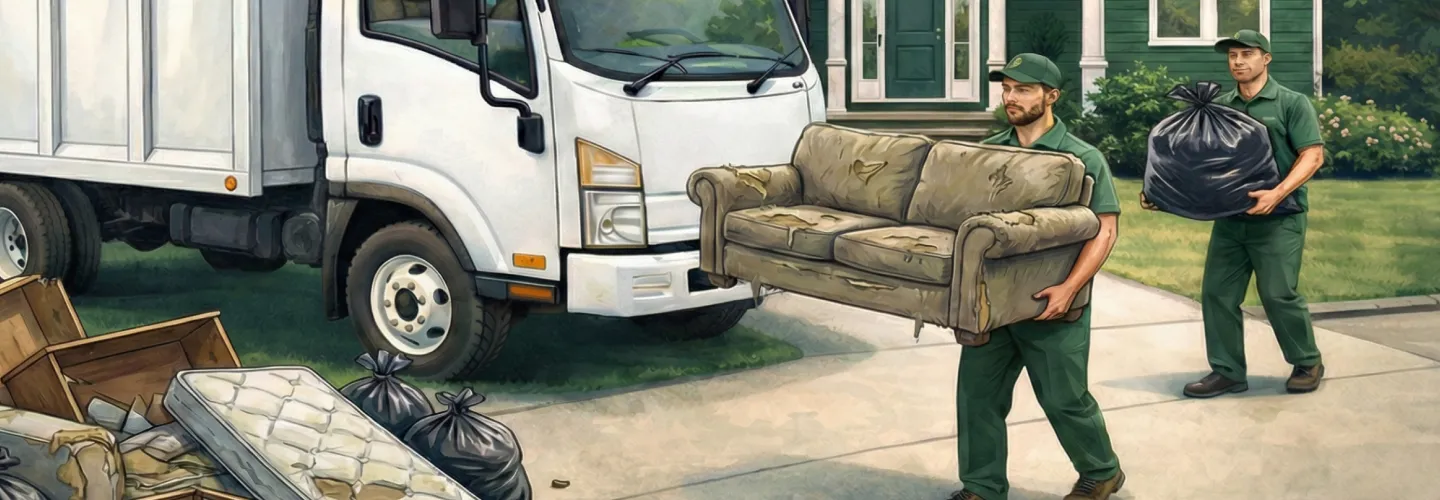
Dallas Medical Facilities Junk Removal Services
Choose our Medical Facilities Junk Removal for expert handling of sensitive waste, strict adherence to health regulations, and a commitment to keeping your facility clean, safe, and compliant.
Get a Free QuoteOur Dallas Junk Removal Services
Medical Facilities Junk Removal in Dallas, GA – Local Service Guide
Medical facilities in Dallas, GA, require specialized junk removal to maintain compliance, safety, and operational efficiency. From outdated equipment to confidential materials, healthcare environments in areas like WellStar Paulding Hospital and clinics near Main Street face unique disposal challenges. Local regulations and strict timelines often dictate removal schedules, especially during renovations or equipment upgrades. Professional junk removal services ensure proper handling, secure transport, and environmentally responsible disposal or recycling, minimizing disruption to patient care and staff routines. Facilities benefit from tailored solutions that address access limitations, volume fluctuations, and the need for discretion, particularly in high-traffic medical corridors and near residential neighborhoods like Seven Hills.
For medical offices, clinics, and urgent care centers, partnering with a local expert streamlines compliance with Dallas ordinances and supports sustainable facility management. Learn more about local rules and resources through the Dallas Public Works Department.
Benefits of Medical Facilities Junk Removal in Dallas
HIPAA-Compliant Disposal
Safe Handling of Medical Waste
Fast and Reliable Service
Licensed and Insured Team
Eco-Friendly Junk Removal
Flexible Scheduling Options
Coordinating Medical Facility Waste Removal with Dallas's Public Works and Code Enforcement
Medical facilities in Dallas, GA, generate specialized waste streams that require careful coordination with municipal departments before removal can proceed. Unlike standard commercial junk, medical facility cleanouts may involve regulated materials that fall under both city ordinances and state environmental law. The Dallas Code Ordinances outline property maintenance standards and violation protocols that apply during facility renovations, relocations, or closures. Before scheduling any removal project, facility managers should confirm compliance with the following:
- Waste classification: Separate regulated medical waste (sharps, biohazard materials) from general facility junk (furniture, non-contaminated equipment, office supplies)
- Hauler licensing: Verify that any contracted removal service holds appropriate commercial waste hauler credentials for Paulding County
- Scheduling coordination: Arrange removal during approved operating hours to avoid noise ordinance violations in adjacent residential zones
- Site access permits: Confirm whether truck staging on public rights-of-way requires advance approval from the city
Dallas Public Works Department
181 Main Street, Dallas, GA 30132
Phone: (770) 443-8115
Official Website: Dallas Public Works Department
Facility operators should contact Public Works early in the planning process to confirm any municipal requirements specific to commercial waste hauling within city limits.
Georgia's Solid Waste Management Act and Medical Facility Disposal Compliance
Georgia state law establishes the regulatory framework governing how medical facility waste must be handled, transported, and disposed of. The Georgia Environmental Protection Division (GA EPD) administers the Georgia Comprehensive Solid Waste Management Act, which sets standards for solid waste handling across all counties, including Paulding County where Dallas is located. Medical facilities must distinguish between categories of waste to remain compliant:
- Regulated medical waste (infectious materials, sharps, pathological waste) must be managed by licensed biomedical waste transporters and cannot be placed in standard solid waste streams
- Non-regulated facility junk (waiting room furniture, cabinetry, non-contaminated fixtures, office electronics) may be disposed of through conventional solid waste channels, subject to local rules
- Pharmaceutical waste requires separate handling under Resource Conservation and Recovery Act (RCRA) guidelines and may not be mixed with general debris
- Electronic equipment containing patient data must undergo certified data destruction before disposal or recycling
Facilities undergoing renovation or closure should consult GA EPD's Solid Waste Management Program to confirm that all waste streams are properly classified and routed to permitted disposal or recycling facilities.
OSHA Safety Standards and Hazardous Material Handling for Dallas Medical Facility Cleanouts
Removing junk from medical facilities in Dallas presents unique safety challenges that go beyond standard commercial cleanouts. Workers may encounter residual biohazard contamination, mercury-containing devices, lead paint in older buildings, and heavy medical equipment requiring specialized lifting procedures. Federal OSHA standards and the EPA Lead-Safe Renovation Rule apply when pre-1978 structures are involved. Key safety requirements include:
- Personal protective equipment (PPE): Gloves, respirators, and eye protection are required when handling items from clinical areas, even if visually uncontaminated
- Sharps protocols: Any loose sharps containers or improperly discarded needles must be handled by trained personnel using puncture-resistant containers
- Mercury devices: Thermometers, sphygmomanometers, and other mercury-containing instruments require hazardous waste handling and cannot enter standard waste streams
- Heavy equipment: Examination tables, imaging equipment, and autoclaves often exceed 300 pounds and require mechanical lifting aids and load-rated dollies
- Asbestos awareness: Facilities built before 1980 may contain asbestos in floor tiles, pipe insulation, or ceiling materials; a survey is recommended before demolition or removal work begins
Paulding County Fire Rescue
240 Constitution Boulevard, Dallas, GA 30132
Phone: (770) 443-3580
Official Website: Paulding County Fire Rescue
Paulding County Fire Rescue provides hazardous materials response guidance and can advise on emergency protocols if unknown substances are encountered during a medical facility cleanout.
Building Permits and Renovation Debris Requirements for Dallas Medical Facility Projects
Medical facility junk removal in Dallas frequently coincides with renovation, tenant improvement, or complete facility closure projects. When removal work involves structural modifications—such as demolishing interior walls, removing built-in cabinetry, or extracting plumbing fixtures—a building permit from the Dallas Community Development Department is typically required. Facility managers and contractors should address the following before beginning work:
- Permit applications: Submit through the Dallas Building Permits office; include scope of demolition, waste management plan, and contractor credentials
- Debris separation: Construction and demolition debris (drywall, metal framing, concrete) should be separated from general facility junk for proper disposal at permitted C&D landfills
- Inspection requirements: Completed demolition work may require a final inspection before the space can be reoccupied or re-permitted for new use
- Stormwater protection: Debris and waste materials must be contained on-site to prevent runoff into storm drains, consistent with Dallas's stormwater management requirements
Dallas Community Development Department
181 Main Street, Dallas, GA 30132
Phone: (770) 443-8115
Official Website: Dallas Community Development
Contact the Community Development Department to confirm permit requirements specific to your medical facility project scope before scheduling removal services.
Recycling and Material Recovery Options for Medical Facility Equipment in Dallas
Responsible disposal of medical facility junk in Dallas should prioritize recycling and material recovery wherever possible. Many items removed during facility cleanouts—metal examination tables, office electronics, waiting room furniture, and scrap metal from fixtures—can be diverted from landfills through proper sorting and recycling channels. The Georgia Environmental Protection Division encourages waste diversion as part of the state's solid waste management goals. Recyclable and recoverable materials commonly found in medical facility cleanouts include:
- Scrap metal: Stainless steel tables, instrument trays, bed frames, and metal shelving have significant recycling value and should be separated from mixed waste
- Electronics and IT equipment: Computers, monitors, printers, and networking hardware must be recycled through certified e-waste processors; data-bearing devices require documented destruction
- Office furniture: Desks, chairs, and filing cabinets in usable condition may be donated to local nonprofit organizations or reuse programs
- Appliances with refrigerants: Break room refrigerators and medical-grade cooling units require EPA Section 608-compliant refrigerant recovery by a certified technician before recycling or disposal
- Cardboard and packaging: Bulk packaging from medical supplies should be broken down and recycled separately
Facility managers should request documentation of recycling and disposal from their removal service provider to maintain compliance records.
What Neighborhoods Do We Serve Throughout Dallas, GA?
- Downtown Dallas: The historic commercial core along Main Street features older medical office buildings with narrow hallways and limited loading access. Removal crews should coordinate with city offices regarding right-of-way use for truck staging on adjacent streets.
- Merchants Drive Corridor: This commercial and retail corridor hosts several medical and dental practices in strip-center configurations. Ground-level access and rear loading areas simplify equipment removal, though shared parking lots require coordination with neighboring tenants.
- Heritage Park Area: Residential neighborhoods surrounding Heritage Park include smaller medical practices in converted homes. Narrow residential streets and limited driveway space may require smaller vehicles for equipment transport.
- Paulding County Government Complex Area: Medical facilities near the county government campus along Memorial Drive benefit from wider road access but may face traffic congestion during business hours, requiring off-peak scheduling for large removal projects.
- Dallas-Acworth Highway Corridor (GA-381): Medical offices and urgent care facilities along this major corridor have good truck access from the highway but may require coordination with Georgia DOT for any roadside staging needs during large-scale cleanouts.
- Brookstone and Westside Residential Areas: Smaller medical practices serving these growing residential communities are typically located in newer commercial developments with adequate parking and loading infrastructure, though HOA-adjacent locations may have aesthetic screening requirements for removal vehicles.